Rechercher dans ce blog

Jumat, 03 Desember 2021

TDOE Names 2021-22 Principals, District Supervisors of the Year - tn.gov

District and School Leaders Receive Highest Statewide Recognition

Nashville, TN — Today, the Tennessee Department of Education announced the two 2021-22 Tennessee Principals of the Year and two Tennessee Supervisors of the Year at the annual Excellence in Education celebration. For the first time in recent program history, scoring for the Tennessee Principal of the Year and Tennessee Supervisor of the Year awards was so close that two outstanding educators were selected for each award.

“As a former school principal, I’m continually inspired by the caliber of principals and district supervisors that we have across the great state of Tennessee, and after all that our leaders in our school communities have done to help their students overcome challenges associated with the pandemic, I am honored to recognize these four truly outstanding individuals this year,” said Commissioner Penny Schwinn. “The success of our students, educators, and state depends on strong leadership, and I am grateful to all the finalists and awardees for their dedication to providing the best all for all students.”

Dr. Chris Hampton of Dobyns-Bennett High School in Kingsport City Schools and Mr. Tyler Salyer of West Collierville Middle School in Collierville Schools were selected as the 2021-22 Tennessee Principals of the Year out of nine Principal of the Year finalists representing Tennessee’s eight CORE regions, as well as the Shelby County-Municipals area.

For 10 years, Dr. Hampton has served as the principal of Dobyns-Bennett High School in Kingsport City Schools. Before becoming principal at Dobyns-Bennett, Hampton served as a special education teacher, school counselor, assistant principal, and secondary curriculum coordinator. 

Mr. Salyer was named principal of West Collierville Middle School in Collierville Schools at the beginning of the 2021-22 school year. Prior to becoming the principal at West Collierville Middle, Salyer served as the principal of Collierville Elementary School in Collierville Schools for four years after beginning his career as a fifth-grade teacher and assistant principal. Well-known for his love of people and can-do attitude, Salyer is dedicated to creating an environment at his school where each child is loved as they grow both academically and socially.

Dr. Hampton and Mr. Salyer follow the 2020-21 Tennessee Principal of the Year, Dr. Leneda Laing. At the time of her award, Dr. Laing served as the principal for Cleveland Middle School in Cleveland City Schools.

"As leaders in Tennessee schools, we have the ability to influence others, from students, parents, teachers and other leaders that can last for generations. The work that we do centers around the students who grow and develop under our leadership,” said 2020-21 Tennessee Principal of the Year, Dr. Leneda Laing. “As Tennessee Principal of the Year, I am humbled to be recognized as an influencer and I share this designation with other principals around the state who are making a difference every day. Together we are all creating an environment for our students to grow and succeed, and I am proud to be a part of this group of leader.”

Of eight Supervisor of the Year finalists representing seven of Tennessee’s eight CORE regions, as well as the Shelby County-Municipals area, Mr. Robert (Scott) Langford of Sumner County Schools and Mr. Rory Hinson of Gibson County Special School District were selected as the 2021-22 Tennessee Supervisors of the Year.

Mr. Langford currently serves as the chief academic officer for Sumner County Schools. Langford previously served as the assistant director of schools for instruction, as well as a principal, assistant principal, and classroom educator in Sumner County. In addition to serving as the chief academic officer, Langford also serves as the chairperson of the Mid-Cumberland Supervisors' Study Council and as a mentor in the Tennessee Literacy Implementation Network.

Mr. Hinson currently serves as the high school supervisor, career and technical education director, and high school testing coordinator for Gibson County Special School District. Hinson has been with the district for 25 years and has previously served as a math teacher, assistant principal, and athletic director. 

Mr. Langford and Mr. Hinson follow the 2020-21 Tennessee Supervisor of the Year, Dr. Kay Martin, a secondary education supervisor in Rutherford County Schools.

“I have been honored to be a part of this amazing experience and program. Tennessee has outstanding school administrators and leaders that have moved mountains to continue serving students and teachers by putting their needs first amidst multiple, unprecedented challenges. Being able to support their leadership in a way that provides further opportunities to students is at the heart of all we do as supervisors in education,” said 2020-21 Tennessee Supervisor of the Year, Dr. Kay Martin.

The annual Principal of the Year and Supervisor of the Year awards recognize administrators who have helped provide educational opportunities for Tennessee students through leadership, programs, and vision. Nominations of one principal and one supervisor were accepted from the state’s school districts. Out of more than 60 applications, up to three regional semifinalists were identified by selection committees in each region, and the region-level finalists for each award were then selected by a state-level selection committee. Overall winners were identified from the finalists following a panel interview.

The winners for the three Tennessee grand divisions were also recognized at the celebration Thursday evening. 

Autumn O’Bryan, principal of Cleveland High School in Cleveland City Schools, was named the East Grand Division Principal of the Year. Nicole Miller Olszewski, principal of KIPP Antioch College Prep Middle of the Tennessee Public Charter School Commission, was named the winner for the Middle Grand Division. Shannon Taylor, principal of Bargerton Elementary School in Henderson County Schools, was named the winner for the West Grand Division. 

Millicent Smith, supervisor for Lenoir City Schools, was named the East Grand Division Supervisor of the Year. Bryan Cofer, supervisor for Cannon County Schools, was named the Middle Grand Division winner. Zoe Bozeman, supervisor for Bartlett City Schools, was named the winner for the West Grand Division.

The 2020-21 Excellence in Education event was postponed due to COVID-19. As a result, the 2021-22 Excellence in Education event also honored the 2020-21 Tennessee Principal and Supervisor of the Year finalists and the 2020 and 2021 Recognizing Inspiring School Employees (RISE) award state finalists.

For information about the 2021-22 Tennessee Principal and Supervisor of the Year finalists, click here. For more information on the Tennessee Principal of the Year award, the Tennessee Supervisor of the Year award, and the Recognizing Inspiring School Employees (RISE) award, click here.

For Tennessee Department of Education media inquiries, contact Edu.MediaInquiries@tn.gov.   

###

Adblock test (Why?)


TDOE Names 2021-22 Principals, District Supervisors of the Year - tn.gov
Read More

Kamis, 02 Desember 2021

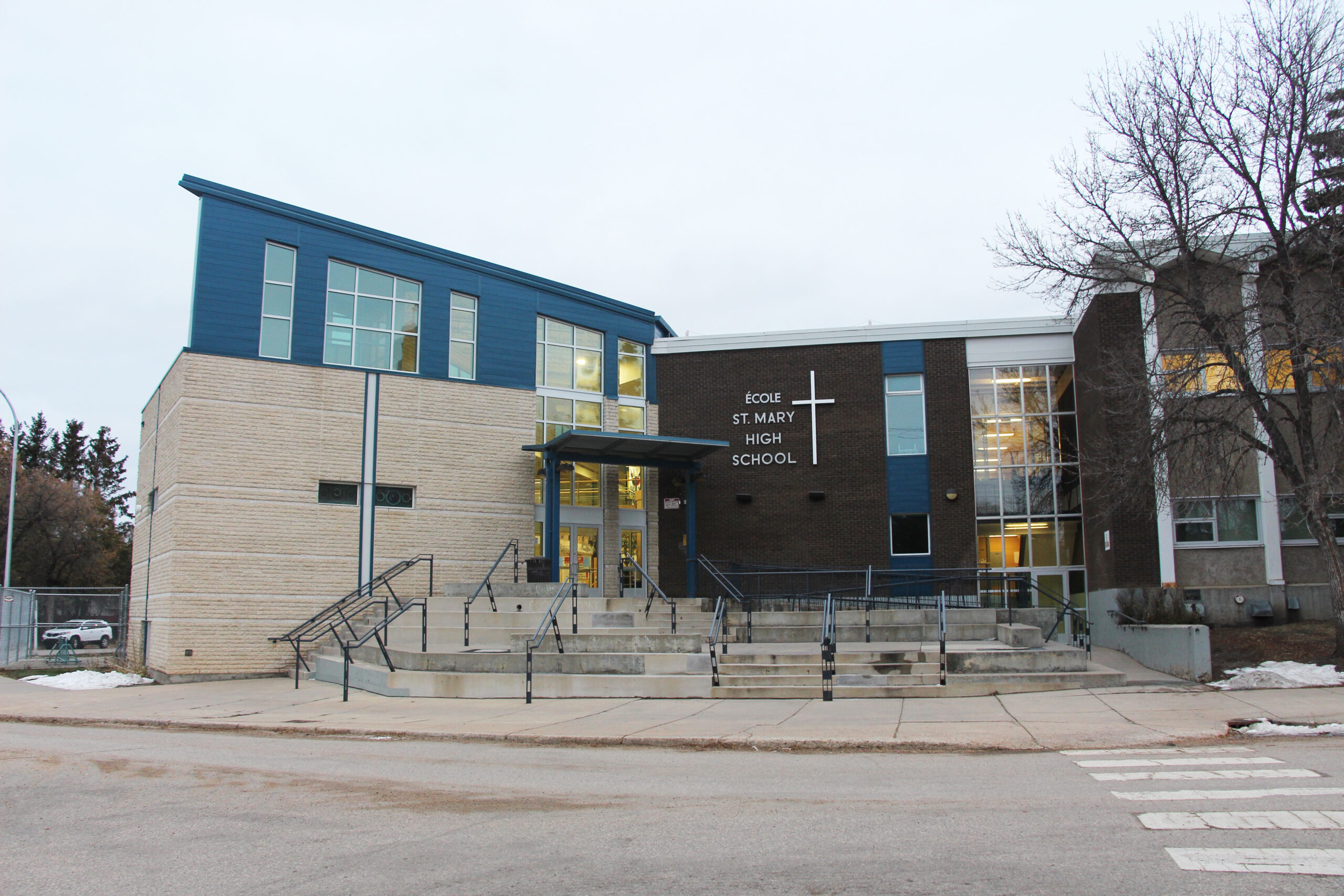
Ecole St. Mary Vice Principal expresses frustration with Minister of Education in letter - Prince Albert Daily Herald

Ecole St. Mary High School vice principal Dwayne Gareau has written a letter to Education Minister Dustin Duncan expressing his frustration with Duncan’s letter to school board chairs around vaccinations and extracurricular activities that was released earlier this month.

The letter was posted on Gareau’s personal Twitter account Wednesday and sent to Duncan the same day.

Gareau declined an opportunity to be interviewed and stated that the letter speaks for itself. In the letter, he expressed his frustration with Duncan’s decision to prohibit certain COVID-19 protocols in school divisions.

He stated that these changes resulted in irresponsible changes to the Prince Albert Catholic Division’s existing policy. The school division already had a policy requiring students to show proof of vaccination to be eligible for involvement in extracurricular activities. If students could not show proof of vaccination they were not eligible.

In his letter to school boards, Duncan wrote that students should be allowed to participate, regardless of their vaccination status.

“The Saskatchewan Government has expressed that the most safe and efficient way to end this pandemic through a path of vaccination. I also believe that the safest and fastest way to end this pandemic is to be vaccinated,” Gareau wrote.

“While we wait for the day that an end to this pandemic is a reality, our school division has created a reasonable plan that encourages safe and practical ways to live with COVID.

“In consultation with our local Medical Health Officer in Prince Albert, our school division has created an extracurricular environment that thoughtfully mitigated the risk of COVID exposure for everyone involved,”

Gareau wrote that Ecole St. Mary prides itself on running extracurricular programming that provides students with meaningful involvement in voluntary activities that take place outside the classroom. However, he also wrote that any extracurricular activities should be considered a possible health risk and treated accordingly.

“As a person in leadership position role at my school, the safety of our staff and students is paramount,” Gareau wrote. “Seeing as you are in leadership position overseeing all all of the staff and students in our province, I would assume you would want to reduce health risks associated with a global pandemic in the most effective way possible.”

He explained that the decision forcefully required the school division to interrupt the current voluntary proof of vaccination procedures.

“While you are on record claiming that vaccines are effective, work and are the way out of this pandemic, you are communicating messaging in discord with this assertion when you willingly interfere with division practices intended to keep everyone as safe as possible,” he wrote.

Gareau stated that Ecole St. Mary was offering the same extracurricular programming as before the pandemic and with procedures in place they saw no reduced interest. This year there are the same number of sports teams, art clubs and music clubs with the same student population as before the COVID-19 pandemic.

“We believe there has been no drop off because students felt safe, and have been told from public health, from our school and most importantly from your government that this what we should all do,” he wrote.

“I find your recent decision is irresponsible but more importantly, immoral. As someone who has spent the last 18 year in education and is heavily involved in extracurricular programming, I am disgusted by your decision to knowingly advocate and campaign for an environment that would clearly be less safe for our staff and students

“We utilized a thoughtful and carefully devised plan that was supported by the overwhelming majority of our school population and public health officials. The decision is illogical and I am asking you to re-evaluate what you are asking us to do.”

In a statement issued on Thursday the Ministry of Education said the government appreciates the time and effort teachers and school support staff give to provide extra-curricular activities for students, but also said the decision was necessary to prevent children from being excluded.

“Recently the Minister of Education directed that boards of education must not require proof of vaccination or the provision of a negative test result as a requirement for students to participate in extra-curricular activities that take place in schools,” the statement reads. “This is consistent with the public health order already in place.

“We believe this directive promotes the inclusion of as many children as possible in extra-curricular activities which are important to help build a well-rounded educational experience.”

michael.oleksyn@paherald.sk.ca

Adblock test (Why?)


Ecole St. Mary Vice Principal expresses frustration with Minister of Education in letter - Prince Albert Daily Herald
Read More

Ecole St. Mary Vice Principal expresses frustration with Minister of Education in letter - Toronto Star

Ecole St. Mary High School vice principal Dwayne Gareau has written a letter to Education Minister Dustin Duncan expressing his frustration with Duncan’s letter to school board chairs around vaccinations and extracurricular activities that was released earlier this month.

The letter was posted on Gareau’s personal Twitter account Wednesday and sent to Duncan the same day.

Gareau declined an opportunity to be interviewed and stated that the letter speaks for itself. In the letter, he expressed his frustration with Duncan’s decision to prohibit certain COVID-19 protocols in school divisions.

He stated that these changes resulted in irresponsible changes to the Prince Albert Catholic Division’s existing policy. The school division already had a policy requiring students to show proof of vaccination to be eligible for involvement in extracurricular activities. If students could not show proof of vaccination they were not eligible

In his letter to school boards, Duncan wrote that students should be allowed to participate, regardless of their vaccination status.

“The Saskatchewan Government has expressed that the most safe and efficient way to end this pandemic through a path of vaccination. I also believe that the safest and fastest way to end this pandemic is to be vaccinated,” Gareau wrote.

“While we wait for the day that an end to this pandemic is a reality, our school division has created a reasonable plan that encourages safe and practical ways to live with COVID.

“In consultation with our local Medical Health Officer in Prince Albert, our school division has created an extracurricular environment that thoughtfully mitigated the risk of COVID exposure for everyone involved,”

Gareau wrote that Ecole St. Mary prides itself on running extracurricular programming that provides students with meaningful involvement in voluntary activities that take place outside the classroom. However, he also wrote that any extracurricular activities should be considered a possible health risk and treated accordingly.

“As a person in leadership position role at my school, the safety of our staff and students is paramount,” Gareau wrote. “Seeing as you are in leadership position overseeing all all of the staff and students in our province, I would assume you would want to reduce health risks associated with a global pandemic in the most effective way possible.”

He explained that the decision forcefully required the school division to interrupt the current voluntary proof of vaccination procedures.

“While you are on record claiming that vaccines are effective, work and are the way out of this pandemic, you are communicating messaging in discord with this assertion when you willingly interfere with division practices intended to keep everyone as safe as possible,” he wrote.

Gareau stated that Ecole St. Mary was offering the same extracurricular programming as before the pandemic and with procedures in place they saw no reduced interest. This year there are the same number of sports teams, art clubs and music clubs with the same student population as before the COVID-19 pandemic.

“We believe there has been no drop off because students felt safe, and have been told from public health, from our school and most importantly from your government that this what we should all do,” he wrote.

“I find your recent decision is irresponsible but more importantly, immoral. As someone who has spent the last 18 year in education and is heavily involved in extracurricular programming, I am disgusted by your decision to knowingly advocate and campaign for an environment that would clearly be less safe for our staff and students

“We utilized a thoughtful and carefully devised plan that was supported by the overwhelming majority of our school population and public health officials. The decision is illogical and I am asking you to re-evaluate what you are asking us to do.”

In a statement issued on Thursday the Ministry of Education said the government appreciates the time and effort teachers and school support staff give to provide extra-curricular activities for students, but also said the decision was necessary to prevent children from being excluded.

“Recently the Minister of Education directed that boards of education must not require proof of vaccination or the provision of a negative test result as a requirement for students to participate in extra-curricular activities that take place in schools,” the statement reads. “This is consistent with the public health order already in place.

“We believe this directive promotes the inclusion of as many children as possible in extra-curricular activities which are important to help build a well-rounded educational experience.”

michael.oleksyn@paherald.sk.ca

Adblock test (Why?)


Ecole St. Mary Vice Principal expresses frustration with Minister of Education in letter - Toronto Star
Read More

This Intensive Internship Helps Principals Get Ready For the Job - Education Week

What if future principals spent a year or two working as a principal-in-training, learning the nuts and bolts of school leadership under the tutelage of a mentor principal before taking the reins at their own schools?

While that may make sense, those programs are rare for school leaders. But that’s exactly what Columbus City Schools in Ohio has been doing for about 15 years, giving 20 teachers annually an opportunity to immerse themselves in the life, duties, responsibilities—and challenges—of being a principal.

Would-be principals get the chance to see if school leadership is really for them before they ditch the training wheels.

About 80 percent of those who go through the Columbus leadership internship program become principals in the district, and of those who do become school leaders, 90 percent stay in their buildings beyond three years, said Kathryn Moser, the executive director of leadership and school programs at Columbus City Schools, who also worked as a former principal and completed the leadership intern program.

That’s a higher average than national numbers, where annual principal turnover is 18 percent, and where about 50 percent of principals leave their buildings after three years.

“In a large urban district the demands on principals are many,” Moser said. “It’s a very complex and ever-evolving role…. And what we’ve found is that it takes time for people to develop those skills to become really effective leaders.”

Teachers who want to participate in the program undergo a rigorous application and selection process. They must have at least five years of teaching experience and two letters of recommendation. They’re also interviewed by a panel of district principals and complete two performance tasks, which can include reviewing a school’s sample data and then planning a staff meeting in response to the data and watching a snippet of classroom instruction and giving feedback on the strengths and weaknesses of what they had observed.

“We do that because we want to understand where the candidates are in terms of their aptitude to use data to make decisions to inform staff progress, and where they are in terms of their ability to understand and articulate effective teaching practices,” Moser said.

Immersion vs. task completion

The New York City, Los Angeles, and Dallas school systems all have leadership pipeline programs in partnerships with local universities that feature an internship component. But while preparation programs generally include a component where aspiring school leaders work in a school with a mentor principal, those opportunities are not as intense or as long as the Columbus program.

What also sets the Columbus program apart is that it’s all internal.

Katina Perry, who worked as a teacher and instructional coach in the district, always knew she wanted to be a principal, but she was waiting on the right opportunity.

As a teacher-candidate, she interned in Akron Public Schools, where the experience was akin to completing a leadership project and hitting a set number of program-required hours.

To become a principal, “I knew I needed more so that I could be really equipped and ready for the challenges that would come along,” Perry said. In the Columbus program, “it was every single day, all day long. Monday through Friday, you are shadowing, and being mentored by, and guided by a mentor principal. Basically, everything they are doing, you are doing; everything they see, you are seeing—every interaction with the staff, how you deal with different personalities, how you deal with the parents.”

While the program is two years long, Perry was promoted to principal of Fairmoor Elementary School after one year.

But that year—the 2019-2020 academic year—was a consequential one for school districts nationwide as they shifted from in-person learning to remote instruction to hybrid instruction over the course of a few months because of the coronavirus pandemic.

“Everything is virtual … I remember just being scared out of my mind,” she recalled.

But having the hands-on experience and working with her mentor-coach, Sarah Foster, the principal of North Linden Elementary School, put Perry on much firmer footing to start the principal’s job during the pandemic, Perry said.

“I already have the answers, because a lot of the questions that were asked are things like that we dealt with last year,” she said. “I can’t even imagine if I would have had to come back this year, first year as a principal, and not have had that whole year to basically practice.”

Perry learned important lessons about school leadership, including forging strong community partnerships and communicating effectively with parents and communities amid a public health crisis. She has used some of those lessons to establish community support networks for students at Fairmoor.

But one of the things she treasures was that although Foster was shadowing her, critiquing her performance, and offering her feedback, she wasn’t trying to mold Perry into a facsimile of herself. Instead, she was encouraging Perry to be the leader she wanted to be.

“If she is trying to be me, that’s not her authentic self,” said Foster, who is now in her sixth year as a principal and participated in the internship seven years ago. “And in order for her to be successful, she needs to build her own leadership style.”

Katina Perry stands in a classroom at North Linden Elementary School in Columbus, Ohio on November 30, 2021. Columbus City Schools has a program that lets principal “test out” the principal role, before actually fully taking it on. Through the program, they work in a school for two years under a mentor principal and fill in as principal at different schools during that time.

Principals in training

Principal-interns spend the first few months shadowing their mentor principals.

As the principal-interns’ aptitude increases, they shoulder more responsibilities and special projects. That can include facilitating grade-level or content-level meetings, overseeing student orientation, and reviewing and updating the school’s safety protocols.

Foster describes it as “on-the-job training, where you gain real knowledge of all of the moving parts” of school leadership.

“You can never really imagine what all of those parts are until you’re the the one making the decisions about all of them,” she said.

Goals over the first few months include understanding how the principal makes decisions, what to consider before responding to an issue in the buildings, observing classroom teaching through the eyes of a principal, and learning how to provide verbal and written feedback to teachers to help them improve.

During the second half of the semester the program interns learn about having difficult conversations, how to de-escalate situations with students and adults, and how to use school and district data to make informed decisions.

On a typical day, the interns often arrive at the school before the mentor principal, consult with the mentor on the day’s priorities, review staff absences and school activities, and provide support to the principal where needed.

And like the world of school leadership, every day holds something different for principal-interns.

“Every day, there is a new situation they don’t teach you in school,” Matthew Holmes, an assistant principal at Columbus Scioto 6-12 high school who spent a year in the program, said about the difference between standard principal-prep training and the hands-on work during the leadership internship.

“This program allows you to talk to somebody every day, bounce ideas, replay situations with them, and also just talk about what your goals are and where your weaknesses are,” he said.

Interns are floored by the constant movement, Foster said.

“They always laugh at my to-do list because I have the most enormous Whiteboard, and as soon as everything is crossed off [the list], I start a new one,” she said. “Every year, there’s probably been a conversation about, ‘How do you know how to do that, instead of that?’”

Real-world experience meets professional development

The program is also geared at helping future principals develop competency around management and communication.

That can include knowing whom to call when there’s a problem with facilities, human resources, and safety and security— the kinds of things Moser describes as the “how-to of the principalship” that teachers don’t think about in the classrooms.

Even the district’s legal counsel runs a session for principal-interns, reinforcing what they may have learned in their principal-licensure program. That can include, for example, the legal and procedural policies related to students who are being served in special education. Principals also learn about identifying students for gifted and talented program

Katina Perry, Sarah Foster, Matthew Holmes and Kathryn Moser talk at North Linden Elementary School in Columbus, Ohio on November 30, 2021. Columbus City Schools has a program that lets principal “test out” the principal role, before actually fully taking it on. Through the program, they work in a school for two years under a mentor principal and fill in as principal at different schools during that time.

The district was “able to tailor the PD [sessions], so they were meaningful and relevant to what we all needed at that specific time in our lives,” Perry said.

Learning to make use of data

The sessions on disaggregating data were extremely beneficial to Holmes, who works in a school that serves only students with emotional challenges and where every student has an individualized education program.

It’s an environment that’s heavy on data use, so being able to give teachers a quick synopsis of students’ data, what they know, and where gaps exist to ensure they are placed in the correct classes is important, he said.

The sessions on teacher evaluations also helped Holmes shore up an area of weakness.

“I have been certified to be able to do it, but I’ve never ever actually had to give somebody their teacher rating,” he said. “I feel the PD really focused on that; so we were prepared to be able to give accurate information to staff ... rather than going in there and without any idea— just kind of thrown to the wolves.”

Principal-interns spend the first year in one school, and the second year in another school, and they also get to serve as substitute principals when a principal is out.

“We do give them a chance to experience standing on their own,” Moser said. “It gives them a great view of the district as a whole. As a teacher, they may have served in only one neighborhood in the city…[A] substitute gets them into all six regions of the city…and to serve at different levels.”

Moser said she believes that time spent as an intern was instrumental to her success and the difference between principals who succeeded and those who struggled in the district.

“When someone didn’t have the same opportunity, but rather moved quickly from a classroom position into the role of principal, they struggled, and the outcomes were not as strong,” she said.

Despite the success in Columbus, the program may not be replicable in every district because of the staffing required to back up teachers taking leave from their classrooms, Moser said. For example, teachers who participate are relieved from their classroom assignments and placed in another school during their internships. Smaller districts and cash-strapped systems may not have the funds to hire another teacher to cover the classroom duties of the principal-in-training. There’s also a small outlay to cover the cost of professional development.

But Moser sees the investment as worth it.

“We retain about 90 percent of our leaders,” she said. “So, while there is a cost and [investment of] time, we continue to believe that this is making a tremendous impact on the quality of our leaders.”

Former interns report that they continue to draw on what they learned and rely on their mentor principals and coaches.

Foster’s mentor is one of her best friends years later, and Foster continues to be a resource for Perry, providing guidance and assistance that can help save the new principal valuable time. One recent example was sharing with Perry the template Foster uses for scheduling and organizing her teacher evaluations—something she developed with her mentor and has tweaked over the years.

“There’s no reason for you to be out there on an island by yourself,” she said.

Sarah Foster, principal of North Linden Elementary School, stands outside of the school in Columbus, Ohio on November 30, 2021. Columbus City Schools has a program that lets principal “test out” the principal role, before actually fully taking it on. Through the program, they work in a school for two years under a mentor principal and fill in as principal at different schools during that time.

Holmes also said the program helped ready him for one of the biggest challenges any school leader has had to face: the pandemic.

Holmes said he would have been “spending all night just going over stuff, just running myself in circles,” without the year in training.

“Now I am able to act, and I am not spending all night sitting there second-guessing. I can knock it out,” he said. “If I don’t have the answers, I know whom to contact now.”

Adblock test (Why?)


This Intensive Internship Helps Principals Get Ready For the Job - Education Week
Read More

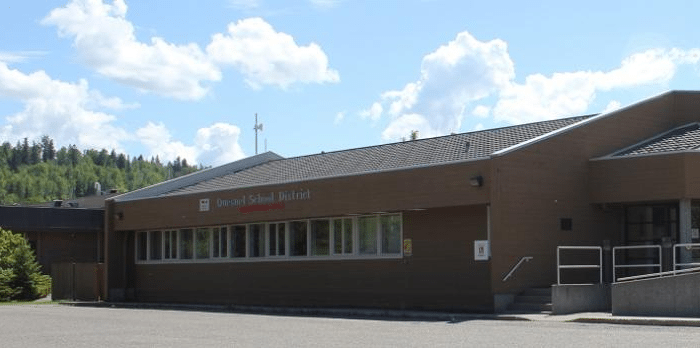
Quesnel School District hires new District Principal of Indigenous Education - mycariboonow.com

JoAnne Moiese has been appointed to the position effective January 1st.

She recently worked as the Lead Teacher for Little Chiefs Primary School operated by the Wiliams Lake First Nation, and Quesnel School Superintendent Sue-Ellen Miller says she is also not a stranger to the Quesnel area.

“One of the ways we met JoAnne is that she was doing some work with the Nazko band, and doing some work in the community, and one of the projects with students was making star blankets.  Just before COVID hit we had Indigenous Day at the Helen Dixon Centre and a number of students were presenting their star blankets as gifts to other students or family members, and JoAnne had been very much a part of that project.”

Miller says Moiese has a solid education background that includes a Bachelor of Education degree from UBC where she was the valedictorian of her class, and she is currently working on a Master of Arts Degree through the University of Northern BC.

Moiese will take over from Patty Kimpton who was in the position for 10 years.

Miller credits her with putting the pieces in place to create a clear path to move forward with the work in Indigenous education.

“Patty started to put together some systems and structures and those pieces that allow us to do the work in a more deep and thoughtful way.   She worked really closely with the Aboriginal Education Council and the indigenous communities themselves, and part of her job was being the Principal of Nazko Elementary, so she spent time in Nazko working directly with the community and the staff out there. She’s also supported our indigenous staff, so all of the indigenous education support workers in various schools throughout the District, the language and culture teachers, so she’s played a really important roll getting those pieces of the education process in place, so that they set up students and staff to be able to do this work in a more thoughtful way.”

It has been a Board of Education goal for decades to close the gap between indigenous students and non-indigenous students when it comes to graduation.

Miller says at one time it was as much as 20 points, but in 2019-2020 she says it was down to just 0.8 percent.

Adblock test (Why?)


Quesnel School District hires new District Principal of Indigenous Education - mycariboonow.com
Read More

Assistant principal accused of working as principal at another school — 400 miles away - Miami Herald

[unable to retrieve full-text content]

Assistant principal accused of working as principal at another school — 400 miles away  Miami Herald
Assistant principal accused of working as principal at another school — 400 miles away - Miami Herald
Read More

Principal, parents raise concerns about Safe Rest Village near school in SW Portland - KPTV.com

[unable to retrieve full-text content]

Principal, parents raise concerns about Safe Rest Village near school in SW Portland  KPTV.com
Principal, parents raise concerns about Safe Rest Village near school in SW Portland - KPTV.com
Read More

EXCLUSIVE: Families seek Ministry probe after Ontario principal linked to toxic workplace allegations - Juno News

[unable to retrieve full-text content] EXCLUSIVE: Families seek Ministry probe after Ontario principal linked to toxic workplace allegations...